MeshCore, the new Kid on the LoRa Mesh Block

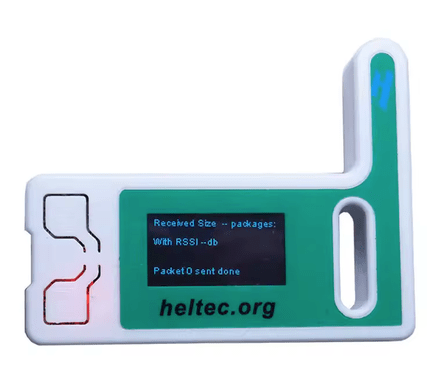
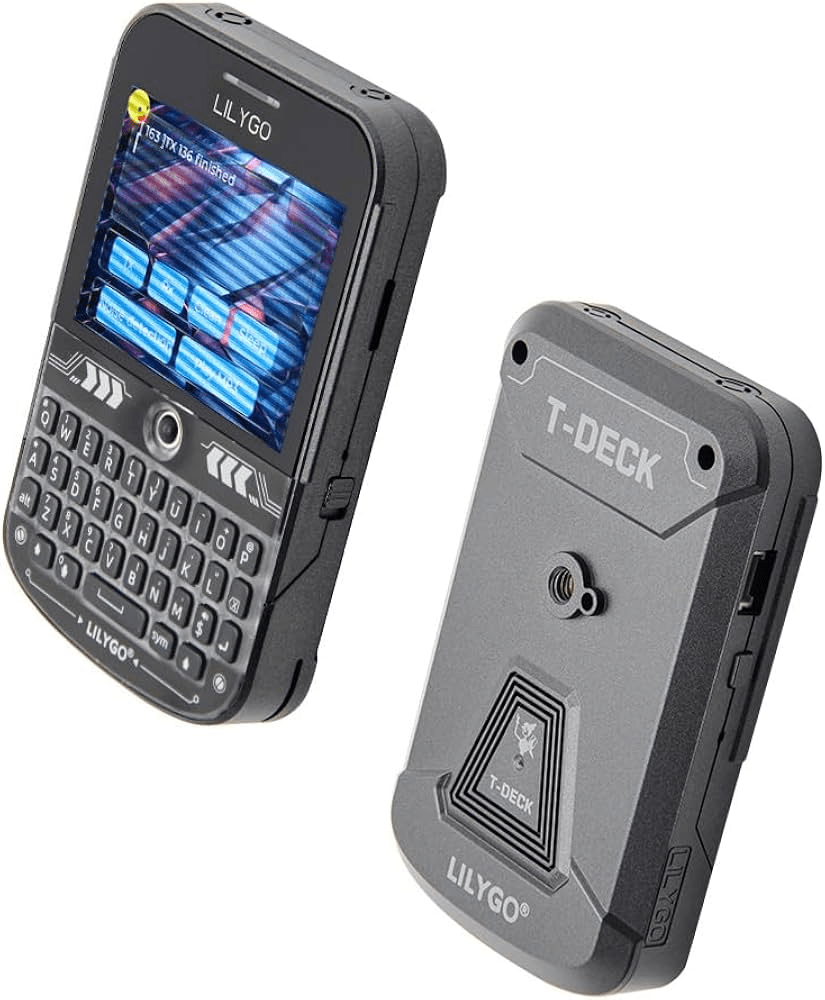
A while ago, I wrote about Meshtastic. At the time, Meshtastic was the thing everyone was talking about: tens of thousands of nodes sold, many products packaged by HELTEC, LILYGO, RAK, and Seeed Studio, and a large international community building a LoRa-based mesh network for long-range communication.

But Meshtastic was yesterday’s trend. Today, the new momentum is around MeshCore, with a significant part of the community migrating to it, especially because the required hardware platforms are largely the same. However, as we will see, MeshCore and Meshtastic are not the same thing. They are not really meant to replace each other, except perhaps for specific use cases where Meshtastic was not particularly well suited and where MeshCore provides more appropriate solutions.

This article introduces MeshCore from a technical and operational point of view, to help clarify what it is and how it works.

Continue reading

The End of IoT Platforms — Why the Future Is the IoT ERP

IoT platforms emerged early in the history of IoT, arguably too early. At the time, the industry was driven by momentum and the urgency to provide ready-to-use solutions.

Over the past decade, however, many of these platforms have been discontinued, transformed, or fundamentally redesigned. This evolution is not accidental; it reflects a deeper structural issue in how the first generation of IoT platforms was conceived.

Continue reading

Frigate – Manage IP Camera with a Raspberry Pi

As a long-time user of high-quality video surveillance systems like Synology and Ubiquiti, I’ve grown accustomed to deploying and relying on their robust, feature-rich ecosystems. However, this time I was looking for something more affordable, focused solely on video management, without the overhead of NAS capabilities or other advanced features. I needed a lightweight solution that could run on a Raspberry Pi—and on Guillaume’s recommendation, I turned to Frigate. This open-source tool offers live video stream management, recording capabilities, and even optional AI-based video analysis. It looks promising and well-built. This post is, as usual, a log of my journey testing this setup in real-time. It’s also an excuse to finally experiment with a Raspberry Pi 5, which I’ve paired with an NVMe drive for video storage, avoiding the SD card’s limited endurance under heavy I/O workloads. I’ll admit, it’s slightly ironic to now need this much power for tasks I used to run smoothly on Synology boxes over a decade ago. Even funnier is that Frigate may require a neural accelerator for its AI features—something that seems excessive when you consider modern AI models like YoLo run on microcontrollers with far less processing power. That said, I don’t plan to use AI in this setup (at least not yet), but I’ve still opted for a dual PCIe HAT to keep the door open for testing a Coral accelerator in the future.

Continue reading

EchoStar IoT – the geostationary LoRaWan solution for Europe

In previous blog posts, I introduced you to satellite-based IoT through technologies like Kinéis and Astrocast. Both of these solutions rely on constellations of satellites, typically in polar rotation around earth and low Earth orbits (LEO), which allow for global coverage—but at the cost of latency due to satellite revisit times.

This time, I want to highlight a different approach to satellite IoT: a solution called EchoStar IoT, which I had the opportunity to explore hands-on by developing a compatible device.

What sets EchoStar apart is its use of geostationary satellite technology. This means the satellite remains fixed relative to a specific area on Earth, continuously covering the same geographical zone. As a result, there is no satellite pass delay—connectivity is constant within the coverage footprint.

However, this also implies a trade-off: a single geostationary satellite cannot provide global coverage. As of today, EchoStar IoT services are available across most of Europe, parts of North Africa, and the entire Mediterranean region.

Continue reading

ThingsBoard Open Source IoT platform

ThingsBoard is an open-source IoT platform designed for device management, data collection, processing, and visualization. It supports a variety of communication protocols, including MQTT, CoAP, and HTTP, allowing seamless integration with diverse devices and sensors. The platform offers powerful tools for monitoring and controlling devices, as well as visualizing sensor data through customizable dashboards.

ThingsBoard provides essential features such as device provisioning, real-time data processing, and rule engine capabilities for automated actions based on data inputs. It also supports user role management, enabling secure access control. With its scalable architecture, ThingsBoard can be deployed on-premises or in the cloud, making it suitable for a wide range of IoT applications, from smart cities to industrial IoT use cases. The platform is highly extensible, supporting integration with third-party systems and services, ensuring flexibility for developers and businesses alike.

Continue reading

Create some Mioty Devices – Step 1

In my previous article, I shared my first steps as a Mioty user. Today, I want to dive into the creation of devices using this technology. It took me some time to publish this follow-up, as I encountered a few challenges—primarily related to an ecosystem that, unfortunately, remains stubbornly inaccessible.

In this initial post, I’ll share my experience with a ready-to-use module from Radiocraft. Future articles will explore other solutions… depending on my available time, of course. As you can probably tell, I haven’t been posting much lately, as I’ve been busy with other projects. Stay tuned!

Continue reading

Wingbits, The DePIN FlightRadar24, ADS-B setup review

Wingbit is a new DePIN blockchain whose goal is to collect ADS-B information provided by aircraft in flight to enable precise tracking, similar to what we know from FlightRadar24, but with a more massive, dense, and global approach. The underlying business model is the resale of this information to companies interested in exploiting it. It remains to be seen how large the demand for this will be in the long term.

However, this project is quite engaging, centered around a topic that resonates with many people, even outside the blockchain and geek spheres. Since it involves radio reception, the choice of hardware is an important consideration when starting the project. As a result, I conducted a small benchmark of various easily accessible equipment to design an efficient, low-cost receiver.

This article will interest anyone who wants to receive aircraft information (ADS-B), including for other projects, as Wingbit has just closed the possibility of building your own receiver.

Continue reading

Critical Analysis of the Meshtastic Protocol

Meshtastic is a mesh protocol (peer-to-peer, network by proximity) based on LoRa technology. LoRa is not LoRaWan, just as WiFi is not IP. It is therefore possible to use LoRa for networks without infrastructure.

Meshtastic was designed for communication outside of any public infrastructure, with a survivalist spirit of autonomous and (more or less) secure communication.

Due to its structure, it is difficult to estimate the size of such a community, but the map seems to indicate that more than 10,000 nodes are currently active. However, it seems that there are actually around 40,000 active nodes, with strong participation from the global ham radio community. In practice, the network is composed of clusters of nodes communicating locally with each other and expanding as clusters become visible to one another. In reality, without linking infrastructure, it won’t be possible to connect from one cluster to another but some MQTT relay features exists.

The use and development of the network require very few resources, as simple DIY nodes based on widely available devkits, such as the T-beam, are sufficient. The user interface works via a mobile application interacting through Bluetooth. The investment is just a few dozen euros. In a previous Meshtastic blog post, I detailed its implementation with small LoRa modules.

Continue reading