MeshCore, the new Kid on the LoRa Mesh Block

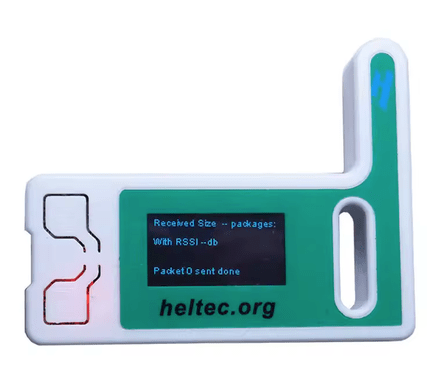
A while ago, I wrote about Meshtastic. At the time, Meshtastic was the thing everyone was talking about: tens of thousands of nodes sold, many products packaged by HELTEC, LILYGO, RAK, and Seeed Studio, and a large international community building a LoRa-based mesh network for long-range communication.

But Meshtastic was yesterday’s trend. Today, the new momentum is around MeshCore, with a significant part of the community migrating to it, especially because the required hardware platforms are largely the same. However, as we will see, MeshCore and Meshtastic are not the same thing. They are not really meant to replace each other, except perhaps for specific use cases where Meshtastic was not particularly well suited and where MeshCore provides more appropriate solutions.

This article introduces MeshCore from a technical and operational point of view, to help clarify what it is and how it works.

Continue reading

ShellHub, not a new CVE, just a nice tool to manage remote RPI devices

I think, like me, you have often encountered the problem of having to manage Raspberry Pi devices that are deployed remotely and behind a NAT. In previous articles, I discussed solutions using SSH, SSH tunnels, and port forwarding. It is a solution I like, but it is somewhat complex to set up and not always very stable. I eventually found a tool that I find interesting and that can be deployed, called ShellHub, which makes this a bit easier to do.

Continue reading

The End of IoT Platforms — Why the Future Is the IoT ERP

IoT platforms emerged early in the history of IoT, arguably too early. At the time, the industry was driven by momentum and the urgency to provide ready-to-use solutions.

Over the past decade, however, many of these platforms have been discontinued, transformed, or fundamentally redesigned. This evolution is not accidental; it reflects a deeper structural issue in how the first generation of IoT platforms was conceived.

Continue reading

Meshtastic, solar nodes

Meshtastic is a network without infrastructure—a true mesh network. However, if the goal is to achieve wide-area coverage, relying solely on portable nodes or devices installed at home is not enough. Deployment on elevated sites, ideally outside urban areas, becomes essential. One of the major advantages of this technology is that it does not require an Internet connection and consumes very little energy, making solar-powered operation a realistic and sustainable option. This also opens the door to deployment in open countryside or remote locations. With that in mind, I explored autonomous solar-powered solutions designed to extend network reach. I was able to test two of them, which turned out to be very different in both quality and price—unsurprisingly, the two aspects are closely linked.

Continue reading

Milesight People Counting solutions

For one of my clients, I had the opportunity to test several different people-counting solutions. Our requirement was for a system capable of communicating independently from the company network, such as through LoRaWAN, while also being available for purchase in single units. I turned to Milesight products, as the company offers a fairly broad range of sensors in this field. From a mechanical and hardware perspective, the sensors are generally of good quality. However, as we have seen, their performance in counting people varies greatly depending on the detection method used.

The entry-level sensors are very affordable, but the more advanced models—those based on image analysis with AI—quickly become much more expensive. Depending on the use case, each type of sensor addresses different needs, making it important to balance precision requirements against budget constraints.

Continue reading

The Things Conference 2025: A Decade of Growth and a Shift Toward Diversity in IoT

TheThingsConference took place once again in Amsterdam, marking what should have been its 8th edition. This year, however, the event carried a special significance: it celebrated the 10-year anniversary of TheThingsNetwork, now a yearly reference point for IoT professionals.

Traditionally, the conference has been strongly oriented toward the LoRaWan ecosystem, providing a deep dive into the technical and industrial advances surrounding it. But this year marked a shift. The organizers deliberately chose to broaden the scope, opening the stage to a wider range of IoT technologies and ecosystems. The result was an edition that felt more diverse, more dynamic, and undeniably more engaging.

With a larger audience and a wider array of perspectives, this year’s sessions offered a rich mix of technical depth and ecosystem insights. For me, the event was not only about the talks themselves, but also about taking a step back to reflect on the IoT market as a whole: how it has evolved over the past year, where it seems to be heading, and what genuinely new ideas and technologies are emerging.

As usual, this article is my way of revisiting those two intense days—sharing my key takeaways, my impressions of the conference, and my thoughts on the shifting landscape of IoT.

Continue reading

Wirepas Open 2025

A technology I haven’t had the chance to talk about until now, mostly because I hadn’t really gotten hands-on with it yet—but one with enormous potential: Wirepas is a managed mesh radio solution, or rather, a radio-agnostic mesh solution. While its most common current use is over BLE at 2.4GHz, it’s far from limited to that.

This week was Open, Wirepas’ annual event, which I had the chance to attend for Rtone, an official Wirepas partner that develops many client solutions using this technology, I work for. So, this is the perfect occasion to share with you the latest updates and my impressions of the event.

Continue reading

Is making a Smart light bulb easy ?

Creating a connected object is easy! This is often what we think, or what we believe we know when we create our first DIY project with an Arduino. When I attend IT conferences and listen to others talk about their projects completed over a weekend or two, that’s the impression I get. But strangely, when I design an object, I ask myself a lot of questions, write a lot of code, not just to make a simple lamp work, but to ensure that it works simply and securely… The saying goes that the “S” in IoT stands for security (geeks will understand), and if IoT has a bad reputation, it’s because of its history (though we can also talk about MS-DOS, W3.11, W95… too), but also because there is a lack of understanding of what IoTs really are. Through a personal experience to understand how a connected bulb works, I will attempt in this article to show you part of the non-functional code used in such a simple object, whose functional purpose can be summarized as adjusting the light intensity between 0 and 100% and changing the color hue.

Continue reading