
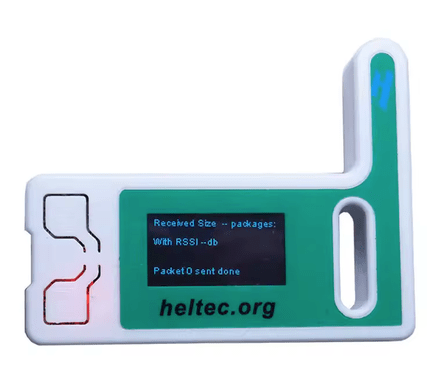
I wanted to explore whether a simple ESP32 could be used to build a LoRaWAN gateway.
To be clear from the start, the goal is not to replace a proper LoRaWAN gateway with an ESP32. Such a setup comes with significant limitations: the ESP32-based gateway will only be able to listen on a single channel. This makes it unsuitable for deploying an actual LoRaWAN network, especially when compared with standard gateways capable of listening simultaneously on multiple channels and spreading factors.
Still, there are situations where such a limited gateway can be useful.
The most obvious one is a home or lab environment. If you have an ESP32-based device that you want to connect to LoRaWAN but do not have a gateway available, building a simple single-channel gateway can be an inexpensive way to get started.
My interest, however, is also in a slightly more professional use case. Within an existing fleet of LoRaWAN devices, there may be a few devices located outside the current coverage area, or devices experiencing persistent coverage issues. Deploying an additional full LoRaWAN gateway to cover only a handful of devices can be relatively expensive and may be difficult to justify or to deploy with B2C products like smart home appliances.
In that situation, a small ESP32-based gateway could provide an interesting temporary solution. It may also be more practical than introducing LoRaWAN relays, considering that relay support and deployment models are still not as mature as conventional gateway-based architectures.
I therefore see this approach primarily as a lightweight or transitional solution: something that can provide local connectivity for a limited number of devices without requiring the immediate deployment of another full-featured gateway.
Continue reading