
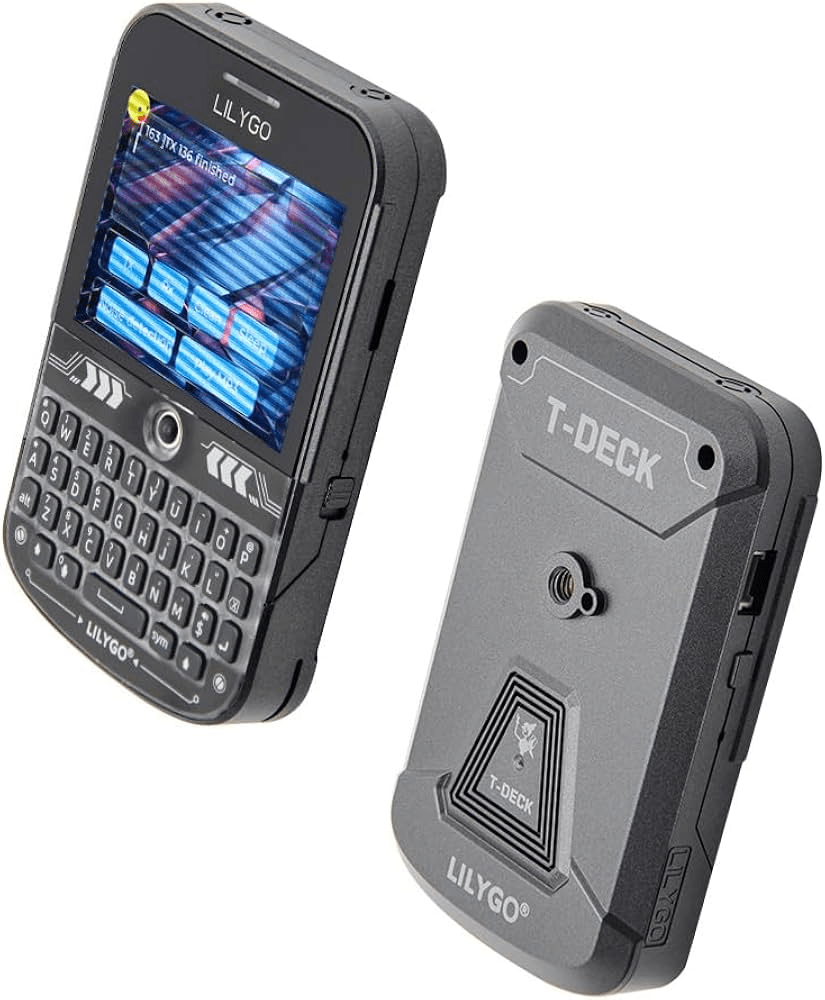
LILYGO T-Deck Plus with Meshcore

The challenge with mesh networks such as MeshCore, Meshtastic, or similar systems is that a phone is still the most practical device for reading information, sending messages, and typing on a keyboard. However, the phone also needs to be connected to a node that can act as the bridge to the LoRa network. In practice, this means carrying several devices, which is not always convenient.

That is why I wanted to test the LILYGO T-Deck Plus. It is a LoRa device with the useful addition of a built-in screen and keyboard. This makes it possible to have a standalone device for communicating on these networks, and it should make mobile testing much easier.

I tried one, and in this post I will share the different steps I followed to get it working.

Continue reading
MeshCore, the new Kid on the LoRa Mesh Block

A while ago, I wrote about Meshtastic. At the time, Meshtastic was the thing everyone was talking about: tens of thousands of nodes sold, many products packaged by HELTEC, LILYGO, RAK, and Seeed Studio, and a large international community building a LoRa-based mesh network for long-range communication.

But Meshtastic was yesterday’s trend. Today, the new momentum is around MeshCore, with a significant part of the community migrating to it, especially because the required hardware platforms are largely the same. However, as we will see, MeshCore and Meshtastic are not the same thing. They are not really meant to replace each other, except perhaps for specific use cases where Meshtastic was not particularly well suited and where MeshCore provides more appropriate solutions.

This article introduces MeshCore from a technical and operational point of view, to help clarify what it is and how it works.

Continue reading